Turkic
Bassinet vs Crib: A Sizing and Use-Case Comparison
Oluşturuldu 03.17
Welcome to the exciting journey of preparing for your new baby. Choosing the right furniture can feel overwhelming. You need to find a balance between comfort, safety, and space in your home for the nursery setup.
Deciding on baby sleep solutions is a big decision for new parents. You might be unsure between a bassinet vs crib. Each has its own benefits for different stages of your baby's growth.
bassinet vs crib
We want your baby to sleep well and for you to feel sure about your choice. Our guide compares the size and use of these sleeping spots. We aim to clear up any confusion, helping you choose the best for your lifestyle. Let us guide you through these early parenting steps with joy and ease.
Key Takeaways
- Size and footprint influence your room layout and placement.
- Bassinets offer better portability for easier room-sharing during early months.
- Cribs provide a long-term sleeping solution as your baby grows.
- Weight limits dictate exactly when to transition your infant safely.
- Budget and available floor space are primary factors in your decision.
- Both options must meet modern American safety regulations for infants.
Understanding Bassinets and Cribs: What's the Difference?
Bassinets and cribs have different roles in a nursery. Knowing their differences is important. As parents prepare for their baby's arrival, they face many choices in nursery furniture.
It's vital to understand what each option offers. Let's define what a bassinet and a crib are. Then, we'll look at their main differences.
What Is a Bassinet?
A bassinet is a small bed for newborns. It's used from birth until the baby is about 4-6 months old. It's small and easy to move, perfect for keeping the baby close to parents at night.
Bassinets have features like mesh sides for air and some rock to soothe the baby. For more info, check out Newton Baby's Bassinet vs Crib comparison.
What Is a Crib?
A crib is a bed for babies from birth to toddlerhood. Cribs are bigger and more stable than bassinets. They have fixed sides and a strong frame. They grow with the child, often turning into toddler beds or daybeds.
Cribs meet strict safety standards for a safe sleep space. They come in many styles and materials, fitting various nursery themes and budgets.
Key Structural Differences
The main differences between bassinets and cribs are size, portability, and age range. Bassinets are smaller and portable for the early months. Cribs are larger and more permanent for longer use.
Knowing these differences helps choose the best for your baby and your lifestyle. Consider space, safety, and your child's growth to make the right choice for your family.
Bassinet vs Crib: Size and Dimension Comparison
It's important to know the size and space needs of bassinets and cribs for a cozy nursery. When picking a baby bed, knowing its dimensions is key.
Standard Bassinet Dimensions
Bassinets are small and snug, perfect for tight spaces. They usually measure 15 to 20 inches wide and 30 to 35 inches long. But, always check the exact size of the bassinet you want, as sizes can differ.
Standard Crib Dimensions
Cribs are bigger and have set sizes. The crib mattress is 28 inches wide and 52 inches long. Cribs might be a bit larger due to their frames and safety features. Remember, while crib sizes are more consistent, there can still be some differences.
Space Requirements in Your Nursery
Before picking between a bassinet and a crib, measure your nursery. Think about the space the bed will take up and room for other essentials like a changing table or storage.
Feature | Bassinet | Crib |
Typical Width | 15-20 inches | 28-30 inches (mattress width) |
Typical Length | 30-35 inches | 52 inches (mattress length) |
Space Requirement | Compact, ideal for smaller spaces | Larger, requires more floor space |
Portability | Generally more portable | Less portable due to size and weight |
Knowing the size and dimension differences between bassinets and cribs is key for good nursery planning. Think about your space and the dimensions of each to choose wisely.
Age and Weight Limits: When to Use Each
Knowing the age and weight limits for bassinets and cribs is key for your baby's safety and comfort. As parents, we aim to make smart choices about our baby's sleep space. It's important to know when to switch from a bassinet to a crib.
Bassinet Age and Weight Guidelines
Bassinets are for newborns and young babies. They're good until your baby is about 4 to 6 months old or reaches a certain weight. This weight is usually around 15 to 20 pounds, as set by the maker.
Most bassinets have a weight limit of 15 to 20 pounds. Always check the maker's guidelines for your bassinet.
Crib Age and Weight Guidelines
Cribs are for longer use. They're good from birth until your child is 2 to 3 years old. Or until they can climb out or reach the crib's weight limit.
The American Academy of Pediatrics says to move your child to a toddler bed when they're about 35 inches tall. Or when the crib's top rail is below their nipple line when standing.
Product | Age Range | Weight Limit |
Bassinet | 0-4 to 6 months | 15-20 pounds |
Crib | 0-2 to 3 years | Varies by manufacturer |
Signs Your Baby Has Outgrown Their Bassinet
Keep an eye on your baby's growth to see if they've outgrown their bassinet. Look for these signs:
- Reaching the weight limit
- Showing the ability to roll over or sit up
- Approaching or exceeding the age limit
As Dr. Laura Jana, a pediatrician, notes, "Watch your baby's growth and follow the maker's guidelines to know when to switch to a crib."
"The American Academy of Pediatrics advises parents to ensure their baby's sleep environment is safe. This includes using a firm, flat mattress and keeping soft objects out of the sleep area."
By following these guidelines, we can make sure our babies sleep safely and comfortably.
Use-Case Scenarios: Which Option Fits Your Lifestyle?
Choosing between a bassinet and a crib can be easier when you know what you need. Different families have different needs. We'll look at different scenarios to help you choose the best option for your lifestyle.
Best Situations for Using a Bassinet
Bassinets are great for newborns, perfect for the first few months. They're ideal for room-sharing, keeping your baby close. They're also good for small spaces where a big crib won't fit.
Here are some benefits of using a bassinet:
- It's close to parents for nighttime feedings and comfort
- It saves space in small nurseries or bedrooms
- It's easy for parents who want their baby nearby
Best Situations for Using a Crib
Cribs are more versatile and can be used longer. They're good for families with more space and who plan to have more kids. Many cribs can change into toddler beds.
Dr. Harvey Karp, a well-known pediatrician, says, "Cribs are safer for babies. They offer a dedicated sleep space for years." Some cribs even adjust and convert, making them a smart long-term choice.
Feature | Bassinet | Crib |
Portability | Highly portable | Less portable due to size and weight |
Longevity | Limited to a few months | Can be used for several years |
Space Requirements | Compact, ideal for small spaces | Requires more space, suitable for larger nurseries |
Portability and Room-Sharing Considerations
Portability is important. Bassinets are easier to move than cribs, great for families who travel or have multiple homes. Bassinets are also better for room-sharing because they're closer to the parents' bed.
The table above shows bassinets are more portable, while cribs last longer. Your choice between a bassinet and a crib depends on your needs and preferences.
A beautifully arranged scene comparing a bassinet and crib for newborns, set in a cozy nursery. In the foreground, a stylish bassinet with gentle curves and soft bedding, lightly draped with a pastel muslin blanket. Next to it, a sturdy crib showcasing a modern design with clean lines, filled with a plush fitted sheet. In the middle ground, a soft, plush rug enhances the warm feel, while a comfortable rocking chair invites relaxation. The background features calming pastel wall colors and nature-inspired wall art, conveying a nurturing atmosphere. Soft, diffused daylight streams through a window, creating a serene ambiance. Captured from a slightly elevated angle to encompass both sleeping options, the focus remains on the contrast between the two, highlighting their unique purposes and aesthetic appeal in a contemporary home setting.
Safety Standards and Considerations
Keeping your baby safe is key when picking between a bassinet and a crib. It's important to know the safety features and standards for these products. This ensures a safe place for your baby to sleep.
Bassinet and crib safety goes beyond the product itself. It's also about how it's used. We'll look at the safety features of both, discuss important standards and certifications, and share common mistakes to avoid.
Bassinet Safety Features to Look For
When choosing a bassinet, look for certain safety features. A sturdy base, a firm mattress, and breathable mesh are important. The bassinet should also be stable to prevent tipping.
- A firm, flat mattress that fits snugly inside the bassinet
- Breathable mesh sides for good airflow and visibility
- A sturdy base to prevent the bassinet from tipping over
- Secure and stable legs or a stable base
Crib Safety Standards and Certifications
Cribs must meet strict safety standards. Make sure the crib you choose follows the latest rules from the Consumer Product Safety Commission (CPSC). Look for certifications from third-party testers to confirm it meets these standards.
Important crib safety features include:
- Slats that are no more than 2 3/8 inches apart
- A firm, snug-fitting mattress
- No missing, loose, or broken parts
- A sturdy and stable frame
Common Safety Mistakes to Avoid
Even with a safe bassinet or crib, there are mistakes to avoid. These include:
- Soft bedding, such as pillows and blankets, which can increase the risk of SIDS
- Placing the bassinet or crib near hazards like windows or curtains
- Not following the manufacturer's assembly and usage instructions
- Ignoring recalls or safety notices for your bassinet or crib
Knowing these potential safety issues and taking steps to avoid them can greatly reduce the risk of accidents. This helps create a safer space for your baby.
Pros and Cons: Weighing Your Options
Bassinets and cribs each have their own good points and downsides. We'll dive into these to guide you in making a choice.
Bassinet Advantages and Disadvantages
Bassinets are great for small spaces and keeping your baby close at night. They are small and easy to move around.
Pros
- Compact and Portable: Bassinets save space, perfect for small homes or shared rooms.
- Promotes Bonding: Having the bassinet next to your bed helps with nighttime feedings and closeness.
- Easy to Move: Bassinets are light, making it simple to move them around.
Cons
- Limited Lifespan: Bassinets are best for the first few months, when the baby is small.
- Safety Concerns: Babies can grow too big for bassinets or get tangled in bedding.
- Additional Cost: Bassinets cost extra if you also plan to buy a crib.
Crib Advantages and Disadvantages
Cribs are a long-term solution for babies. They offer a safe and comfy place to sleep for years.
Pros
- Long-Term Use: Cribs can be used from infancy to toddlerhood, often turning into toddler beds.
- Safety Standards: Cribs meet strict safety standards, ensuring a secure sleep space.
- Customization: Many cribs have adjustable mattress heights and can convert into other beds.
Cons
- Space Requirements: Cribs take up more room in the nursery or bedroom.
- Initial Investment: Cribs are pricier than bassinets, but they last longer.
- Assembly Required: Cribs often need to be assembled, which can be hard and time-consuming.
Here's a table to show the main differences:
Feature | Bassinet | Crib |
Lifespan | First few months | Infancy to toddlerhood |
Space Requirement | Compact | Larger |
Portability | High | Low |
Safety Features | Basic safety standards | Rigorous safety standards |
Cost | Generally less expensive | Can be more expensive |
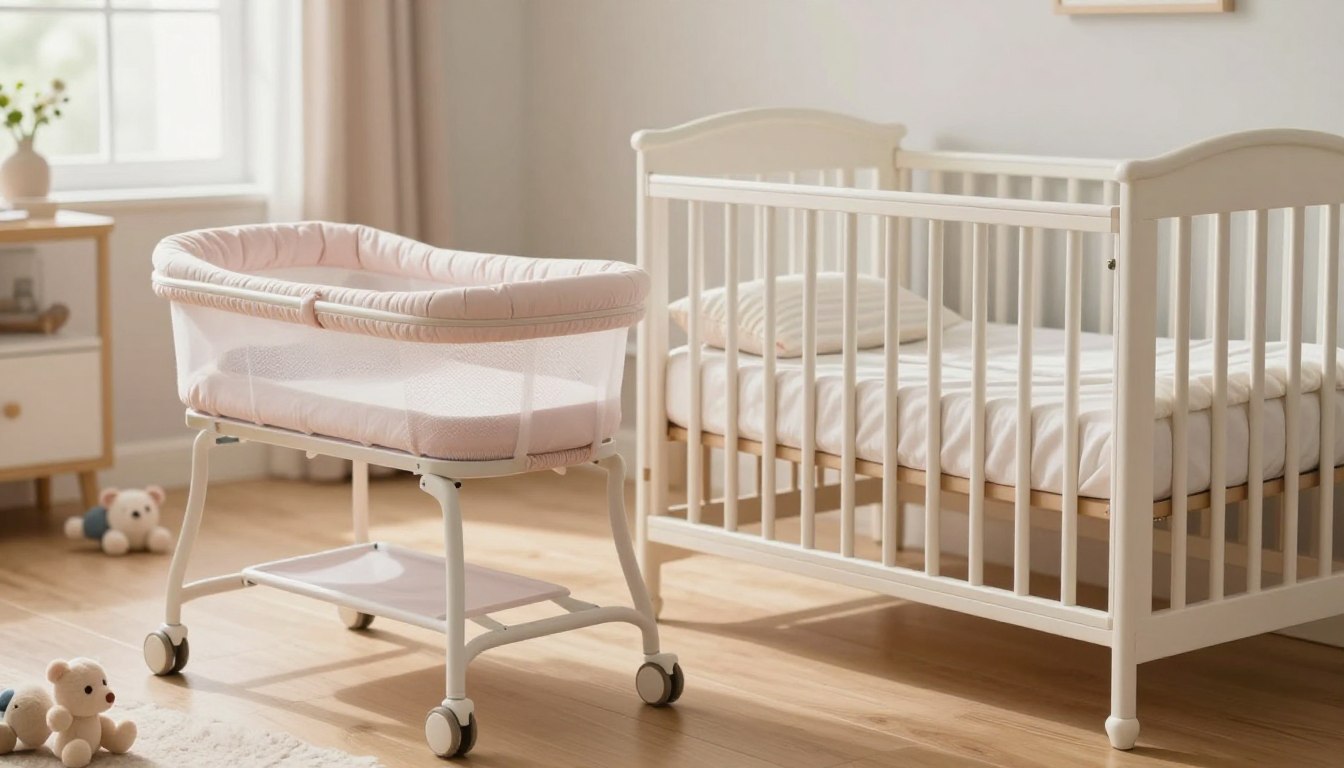
A detailed comparison image showcasing a bassinet and a crib side by side, arranged in the foreground with a soft, blurred nursery background. The bassinet is elegantly designed, featuring a gentle curve and soft fabrics, placed on a light wooden floor with plush toys nearby. The crib, in contrast, has a classic design with straight lines, showcasing a cozy pastel bedding set. Natural light filters in through a nearby window, creating a warm, inviting atmosphere. The scene captures the essence of a nurturing space, emphasizing the pros and cons of each sleeping option. The angle is slightly elevated for a comprehensive view, allowing for a clear side-by-side comparison while maintaining a serene and tranquil mood.
Cost Comparison and Budget Planning
Choosing between a bassinet and a crib is more than just about what they do. It's also about the money, which is why comparing prices is key. As new parents, knowing the financial side of their choices can really help with budgeting.
Looking at the cost, it's important to think about more than just the first price tag. Bassinets and cribs vary in price due to things like brand, quality, and design.
Average Bassinet Prices
Bassinets can cost a lot, depending on what they have and who made them. A simple bassinet might cost between $100 and $300. But, if you want one with extra features like rocking or lights, prices can go up to $600 or more.
What affects bassinet prices includes:
- Material and build quality
- Extra features (like vibration or music)
- Brand reputation and warranty
Average Crib Prices
Cribs cost more than bassinets because they're used for longer and come in many styles. A basic crib starts at $150. But, cribs with special features or high-end designs can cost over $800.
Things that affect crib prices are:
- Can it change into a toddler bed?
- Material and how well it's made
- How safe it is and any special safety features
Long-Term Value and Investment
When deciding between a bassinet and a crib, think about how long you'll use it. Bassinets are used for just a few months, while cribs can last for years. This makes cribs a better long-term investment.
Product | Average Price Range | Usage Duration | Long-Term Value |
Bassinet | $100-$600 | 3-6 months | Limited, short-term use |
Crib | $150-$800+ | 2-5 years | High, long-term investment |
Choosing between a bassinet and a crib should be a careful decision. It's about what you need, how much you can spend, and what's best for your baby. By looking at both the upfront cost and the long-term benefits, parents can make a choice that fits their budget and their baby's needs.
Conclusion
Choosing between a bassinet and a crib for your baby can be tough. We've looked at the main differences in size, age, and weight limits. We've also talked about when and where to use each one, and their safety features.
Knowing the good and bad of each choice helps you decide what's best for you and your baby. You might prefer a bassinet for its ease of moving or a crib for its long-term use. Always choose what's safest and most comfortable for your little one.
Think about what you need and want for your nursery. With the information we've shared, you're ready to pick the right one. This will help create a cozy space for your baby to grow and flourish.
FAQ
What is the primary difference between a bassinet and a crib?
Bassinets and cribs both offer safe sleep spots. Bassinets, like the HALO BassiNest, are smaller and portable. They're perfect for newborns and often have wheels for easy movement. Cribs, such as the Babyletto Hudson, are larger and last longer, fitting your child from infancy to toddlerhood.
Is it safer for a newborn to sleep in a bassinet rather than a crib?
Both are safe if they meet CPSC standards. Look for the JPMA seal. Bassinets are great for the first few months because they're smaller. This makes it easier to follow AAP guidelines for room-sharing, which can lower SIDS risk.
When should we transition our baby from a bassinet to a crib?
Babies usually outgrow bassinets by four to six months. Switch when your baby reaches the weight limit, often 15 to 20 pounds. Or when they can roll over or push up on their hands and knees.
Can we skip the bassinet and use a crib from day one?
Yes, you can start with a crib right away. If your bedroom is big enough, a full-sized or mini crib is safe for newborns. Make sure the mattress is firm and fits the crib perfectly, without gaps.
Are the mattresses different for bassinets and cribs?
Yes, they differ in size and thickness. Bassinet mattresses are thinner and shaped for the bassinet. Crib mattresses, like those from Newton Baby, are thicker and must fit a standard crib frame. Never swap them; always use the mattress recommended by the manufacturer.
Which option is better for a small nursery or a master bedroom?
Bassinets are better for small spaces in the early months. They take up less room and can fit in corners or beside your bed. For a long-term solution in a small nursery, consider a convertible mini crib. It's safe and takes up less space than a standard crib.
Contact
Leave your information and we will contact you.