Tiếng Việt
Cribs with Adjustable Side: Key Specs to Confirm
Tạo vào 03.16
Choosing the right nursery furniture is a big decision for families. A high-quality crib with adjustable sides is key for daily care. It makes lifting the baby during late-night feedings easier.
crib with adjustable side
Every parent wants a secure space for their child to sleep in peace. We focus on strength and safety when checking these items. A sturdy rail panel is crucial for long-term safety.
The design must fit any room size. Using solid materials like maple or oak improves stability. These steps help create a cozy spot for the baby.
Key Takeaways
- Confirm rail height safety levels.
- Check for solid wood builds.
- Look for JPMA certifications.
- Verify mattress support strength.
- Inspect hardware quality.
- Ensure smooth modification mechanisms.
Understanding What Makes Adjustable Side Cribs Different
Adjustable side cribs are popular in many nurseries. They offer convenience, safety, and versatility. These cribs grow with your baby and meet changing needs.
Let's look at what makes adjustable side cribs special. Their design has changed a lot over time. This change is due to new technology and what parents want.
The Evolution of Adjustable Crib Design
Adjustable cribs have been around for a while. But, recent updates have made them safer and more useful. Today's cribs have smart features for easy height adjustments and side panel changes.
Some key updates in crib design include:
- Improved safety features, such as secure locking mechanisms and sturdy construction
- Enhanced adjustability, allowing for multiple height settings and sometimes convertible designs
- Increased focus on durability and sustainability in materials
Benefits We Value in Adjustable Features
So, what do adjustable side cribs offer? Convenience, safety, and versatility are key for us.
Here are some main benefits:
- Convenience: Adjustable cribs make caring for your baby easier, like during diaper changes and feedings.
- Safety: Adjusting the crib's height helps prevent back strain and reduces accident risks.
- Versatility: Many cribs can change into toddler beds or even full-size beds as your child grows.
These benefits show that adjustable side cribs are more than furniture. They're an investment in your child's comfort and your peace of mind.
Safety Certifications Your Crib with Adjustable Side Must Have
To ensure your baby's safety, look for cribs with adjustable sides that have safety certifications. These certifications show the crib has been tested and meets high safety standards.
Safety certifications are very important. They show the maker's commitment to safety. When you're looking for a crib, check for these certifications to make a safe choice.
CPSC Federal Safety Standard Compliance
The Consumer Product Safety Commission (CPSC) sets safety standards for cribs. All crib makers must follow these standards. A crib that meets CPSC standards has passed tests for safety and strength.
CPSC compliance is non-negotiable when it comes to crib safety. It means the crib is made with safety in mind, lowering the risk of accidents.
ASTM F1169 Full-Size Crib Certification
The ASTM F1169 standard is for full-size cribs. It covers safety requirements. A crib with this certification has been tested for safety and durability.
Cribs that meet the ASTM F1169 standard have been tested for regular use. They provide a safe place for your baby to sleep.
JPMA Seal and Third-Party Testing
The Juvenile Products Manufacturers Association (JPMA) promotes safety in juvenile products. The JPMA Seal on a crib means it has been certified by a third-party. This shows it meets or exceeds safety standards.
Third-party testing adds extra assurance. It's independent verification of the crib's safety features and standards compliance.
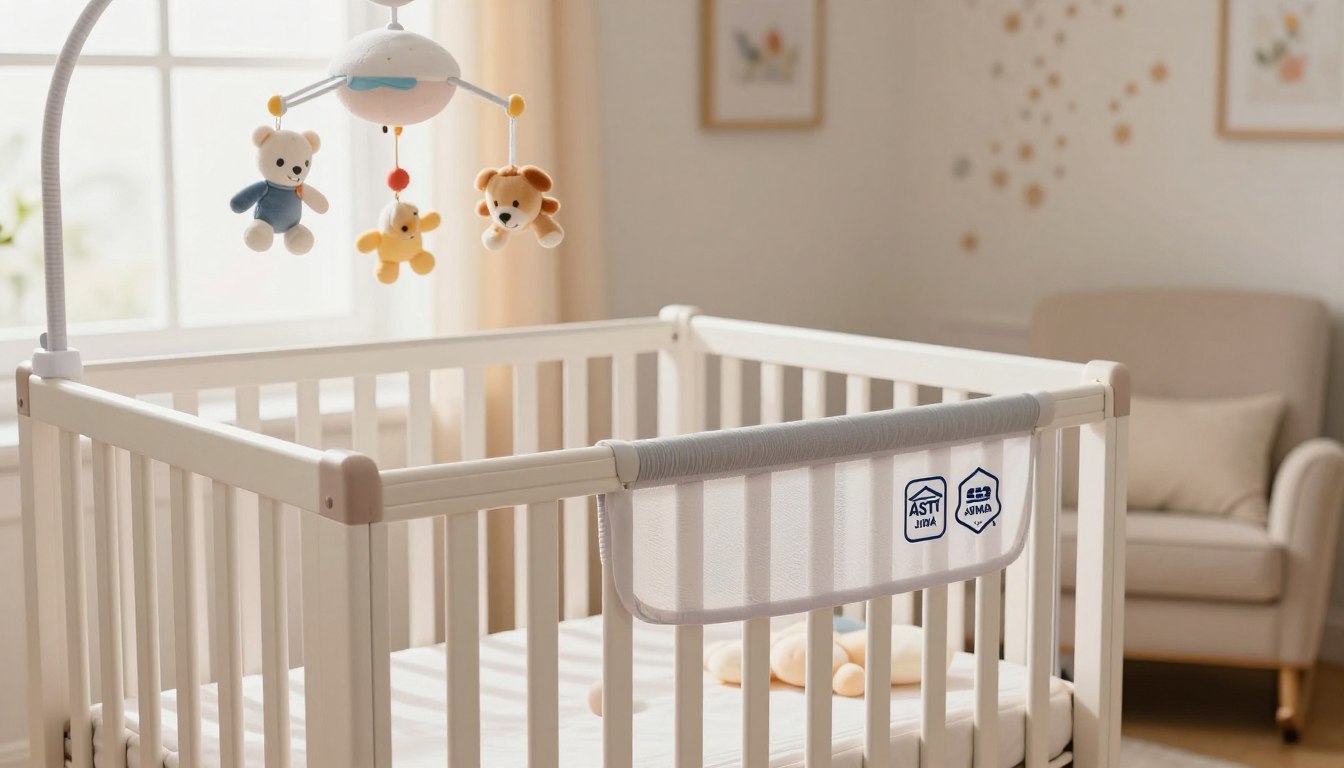
A well-designed nursery setting featuring a safe and secure crib with adjustable sides prominently displayed. In the foreground, the crib is shown with a gentle pastel color palette, showcasing safety certifications like ASTM and JPMA badges prominently on its side. The middle ground includes soft, natural lighting filtering through a window, casting a warm glow on plush toys and a cozy mobile hanging above the crib. In the background, a calm and inviting atmosphere is created with delicate wallpaper patterns and a comfortable rocking chair. The overall mood is serene and reassuring, emphasizing safety and compliance in a nurturing environment, with a focus on the importance of crib safety certifications.
Certification | Description | Importance |
CPSC Compliance | Mandatory federal safety standards for cribs | Ensures structural integrity and material safety |
ASTM F1169 | Safety requirements for full-size cribs | Tests for durability and stability |
JPMA Seal | Third-party certification for safety standards | Verifies compliance with safety standards |
Mattress Support and Height Adjustment Specifications
The mattress support and height adjustment features of a crib are vital. They ensure your baby's comfort and safety as they grow.
When choosing a crib with an adjustable side, consider the mattress support and height adjustment. These features are not just about convenience. They are critical for your baby's safety and comfort.
Minimum Number of Adjustment Positions Required
A crib should have multiple height adjustment positions. This is to accommodate your growing baby. We recommend looking for cribs with:
- At least 3 to 5 adjustment positions.
- This flexibility allows you to lower the mattress as your baby becomes more mobile, ensuring their safety.
Height Range from Lowest to Highest Setting
The height range is another critical factor. The highest setting should allow for easy access to your baby. The lowest setting should prevent your baby from climbing out. Consider a crib that offers a wide range of height adjustments to meet your needs at different stages.
Adjustment Mechanism Durability and Ease of Use
The adjustment mechanism should be both durable and easy to use. Look for cribs with mechanisms that can withstand frequent adjustments. A smooth and quiet operation is a sign of a well-designed adjustment mechanism.
Key considerations include:
- Durability: Can the mechanism withstand repeated use?
- Ease of Use: Is adjusting the height simple and straightforward?
By focusing on these aspects, you can ensure that your crib provides the necessary support and flexibility as your baby grows.
Material Quality and Construction Details to Verify
When picking a crib, it's key to check the material quality and construction details. These factors affect the crib's durability and safety. They make sure it's a safe place for your child.
The material used in making the crib is very important. Solid wood and engineered wood are common choices. Let's look at how they compare.
Solid Wood vs. Engineered Wood Performance
Solid wood cribs are durable and look great. They're less likely to get damaged than engineered wood cribs. But, solid wood cribs can cost more and might get scratched or dented easily.
Engineered wood cribs, made from pressed wood layers, are cheaper. They're still safe and durable. But, they might not be as strong as solid wood cribs.
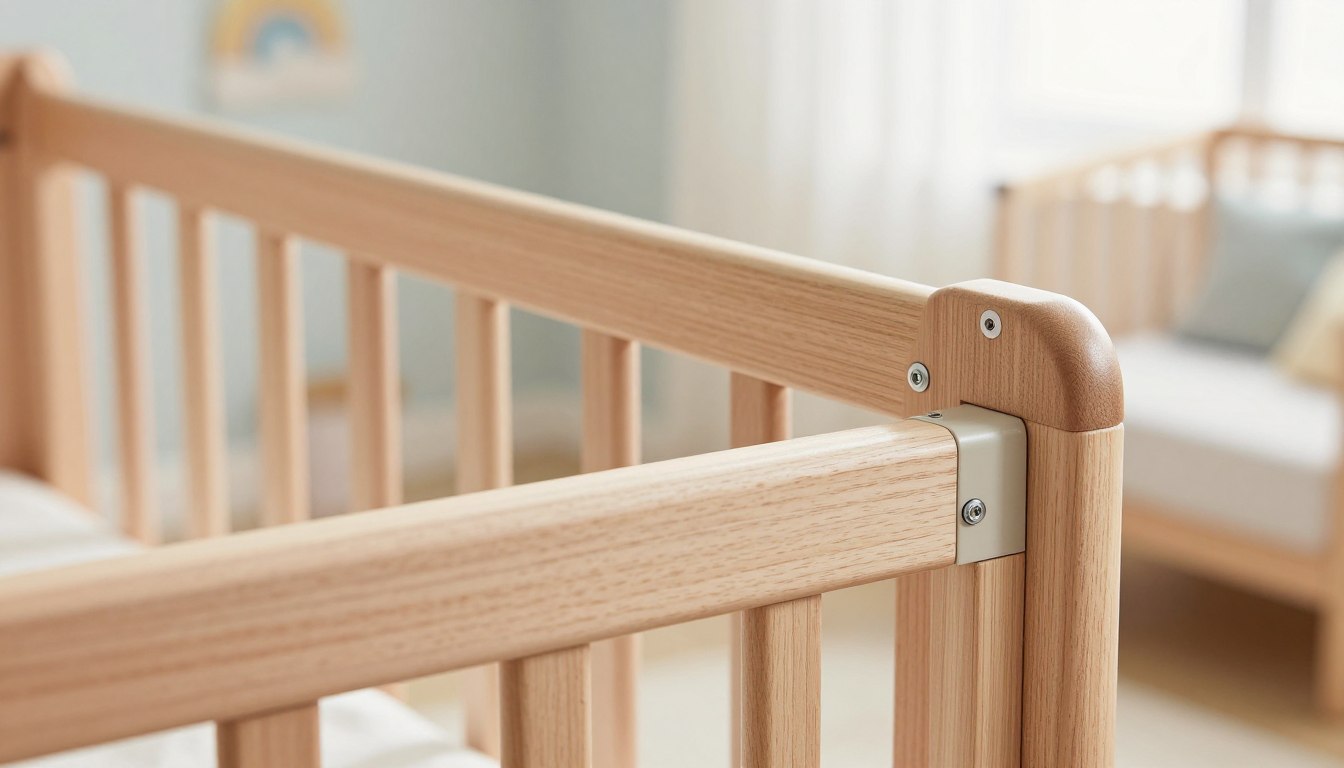
A close-up view of high-quality crib materials, showcasing the fine craftsmanship and construction details. In the foreground, display various wood textures, such as smooth oak and sturdy maple, with an emphasis on the grain patterns. Include elements like non-toxic finishes and smooth joins to highlight safety features. In the middle ground, reveal adjustable side mechanisms with intricate metal fittings that ensure durability and ease of use. The background should have a soft, light-filled nursery atmosphere, featuring muted pastel colors and gentle lighting to create a calming mood. Use a shallow depth of field to focus on the materials, illuminated by natural light streaming through a window, capturing the essence of comfort and safety in baby furniture.
Non-Toxic Finish and VOC-Free Paint Standards
The finish and paint on the crib are also very important. A non-toxic finish and VOC-free paint keep your child safe from harmful chemicals. VOCs, or Volatile Organic Compounds, can harm your child's health.
Choose cribs that have been checked by trusted groups. This ensures they meet strict standards for safe finishes and paints.
Slat Spacing and Strength Requirements
The slats of the crib are also very important. The slats should be no more than 2 3/8 inches apart. This prevents your child's head from getting stuck. The slats also need to be strong enough to hold your child's weight without breaking.
It's crucial that the crib meets these slat spacing and strength requirements. This ensures your child's safety.
Essential Dimension and Fit Specifications
Choosing the right crib is key for a safe and cozy nursery. The crib's size is not just about fitting the room. It's also about keeping the baby safe and comfortable.
Crib dimensions are very important. A crib that's too big can make the room feel cramped. On the other hand, a crib that's too small might not give the baby enough room to move.
Interior Mattress Dimensions and Tolerances
The size of the mattress inside the crib is a big deal. The crib's interior should match standard mattress dimensions for a good fit. A tight fit is important to avoid any gaps that could be dangerous for the baby.
Usually, the inside of the crib should be about 28 inches by 52 inches. There should be a small gap, no more than 1/8 inch, between the mattress and the crib sides. This tight fit helps prevent the baby from getting trapped.
Overall Footprint and Nursery Space Planning
Nursery space planning is also very important. The crib's size should fit well in the nursery, leaving enough room to move around. It's not just about the crib's size; how the nursery is laid out matters too.
When planning the nursery, think about how the crib fits with other furniture and the room's layout. A well-thought-out nursery makes sure the crib is safe and easy to reach.
Rail Height and Side Panel Measurements
The height of the rail and the side panels are crucial for safety and function. The rail should be high enough to stop the baby from climbing out as they grow. The side panels should be strong and tall to keep the baby safe.
The rail should be at least 26 inches from the top of the mattress support in its lowest position. This keeps the crib safe as the baby gets older and more active.
Hardware Standards and Weight Capacity Ratings
The hardware and weight capacity of a crib are key to its safety and durability. When picking a crib, look closely at the hardware. It's crucial for the crib's stability and reliability.
For more insights on choosing the right crib, you can visit The New York Times Wirecutter for their expert reviews.
Fastener Type and Anti-Loosening Features
The fasteners in a crib's construction are very important. High-quality fasteners that don't loosen over time are essential. This prevents any structural problems. Look for cribs with strong fastening systems and anti-loosening features.
Maximum Weight Limits for Mattress Platforms
Knowing the maximum weight for the mattress platform is crucial. This ensures the crib can safely hold the mattress and child. A good crib should support at least 50 pounds on the mattress platform.
Corner Post and Decorative Element Safety
Crib corner posts and decorations must be safe. Corner posts should not be too high, to avoid entanglement risks. Also, decorations should be securely attached to prevent them from becoming loose and dangerous.
Hardware Feature | Safety Specification | Importance Level |
Fastener Type | Robust, anti-loosening | High |
Maximum Weight Limit | Minimum 50 pounds | High |
Corner Post Height | Not excessively high | Medium |
Decorative Elements | Securely attached | Medium |
Conclusion
Choosing the right crib with adjustable side for your nursery is important. We've looked at safety certifications, material quality, and construction. These ensure your baby's safety and comfort.
When picking a baby crib, check its safety features, convenience, and comfort. A crib that meets safety standards, like CPSC and ASTM, is key. The quality of the crib's material and build also matters a lot for a safe and cozy space.
By focusing on these points and your nursery's needs, you can choose wisely. This guide helps you find the best crib with adjustable side. It ensures a comfy sleep spot for your baby.
FAQ
Why is it important for us to choose a crib with multiple mattress height positions?
Having at least three or four adjustment positions is key for safety and comfort. When our babies are newborns, a higher setting makes lifting them easy without straining our backs. As they grow, like sitting up or standing, we lower the mattress to keep them safe from climbing or falling out.
What safety certifications should we look for when shopping for brands like DaVinci or Graco?
We check for the JPMA Seal and ASTM F1169 to ensure the crib's safety. The GREENGUARD Gold Certification is also important. It shows the furniture has been tested for over 10,000 chemicals and meets strict VOC-free paint standards, improving indoor air quality for our babies.
How do we distinguish between the performance of solid wood and engineered wood in crib construction?
Brands like Million Dollar Baby Classic use solid New Zealand Pine, known for its sustainability and durability. Solid wood gives a high-end feel and natural strength. High-quality engineered wood, on the other hand, offers stability against warping. Both must have a non-toxic, lead-free finish and slat spacing no more than 2 3/8 inches to prevent entrapment.
What are the essential dimensions we need to confirm before purchasing a crib?
The mattress must fit tightly in the crib to avoid gaps. We also measure the crib's overall size to ensure it fits in our nursery. It should have proper rail height and easy access to the adjustable side mechanisms.
What should we know about the hardware and weight capacity of modern cribs?
Look for cribs with high-quality fasteners, like anti-loosening features and metal-to-metal bolts. These offer more security than wood screws. Most cribs have a maximum weight limit of around 50 pounds. Also, check for any sharp edges or decorative elements that could snag a baby's clothing.
How has the design of adjustable cribs evolved to improve safety?
The industry has moved from old-fashioned drop-side models to safer stationary rail designs. These cribs have adjustable mattress supports. This change keeps the crib's structure strong while offering the versatility and convenience we need for our babies' first few years.
Contact
Leave your information and we will contact you.